


Azerbaijan can be visited year-round, with each season offering a different experience. Spring brings mild weather and lush nature, autumn offers golden mountain landscapes and harvest season, winter is ideal for skiing at Shahdag and Tufandag, while summer suits mountain and coastal exploration despite Baku’s heat. Overall, May, September, and October stand out for their comfortable weather, fewer crowds, and seasonal experiences.
When Is the Best Time to Visit Azerbaijan
The best time to visit Azerbaijan generally runs from April through June in spring, and from September through October in autumn. During both seasons, temperatures range between fifteen and twenty-five degrees, which makes walking around Baku, hiking in the mountains, and visiting historical sites more comfortable and less tiring.
Best Overall Time to Visit Azerbaijan
May and September are among the most notable months of the year for visiting Azerbaijan for all types of travelers. The weather is mild, prices have not yet reached their peak, and all tourist attractions remain fully open. In May, events such as the Baku Flower Festival take place while nature shows itself in its finest form.
September brings comfortable temperatures ranging between eighteen and twenty-six degrees, alongside a drop in crowds after the summer season. Both months allow for combining Baku, the mountains, and the cultural regions within a single trip without too much exhaustion.
Contact Makani to design your trip!
Best Time for Sightseeing
April, May, September, and October are suitable months for moving between tourist attractions. Temperatures allow for hours of walking comfortably, and crowds at the main sites are lighter compared to July and August.
During this period, Baku shows itself in a distinctive way, with outdoor cafes and restaurants and the festive lighting of its landmarks. Historical sites such as the Old City, Sheki, and Shamakhi can also be visited with greater ease.
Best Time for Outdoor Activities
April and May are suitable for hiking at lower elevations, after the snow melts and flowers begin to bloom. June and early July open up the higher mountain trails in Khinalug and Gabala. September and October offer the chance to walk amid autumn colors in Sheki and Quba.
Water activities on the Caspian Sea start from June and extend through September, when the water becomes warm enough for comfortable swimming.
Best Time for Skiing
The official skiing season in Azerbaijan runs from mid-December through the end of March. Shahdag opens its season on December 15 with forty-five kilometers of trails and five hundred and thirty-two snow cannons to ensure snow coverage. Tufandag in Gabala also opens on the same date.
January and February represent the peak of the season with the best snow quality and lower crowds after the New Year celebrations end. March gives visitors the last chance to ski as temperatures begin to rise gradually.
Best Time for Beaches
The beach season in Azerbaijan runs from June through September. The waters of the Caspian Sea begin reaching a suitable temperature for swimming from June. July and August represent the peak of the beach season, but they are also the most crowded and the most expensive.
September offers a quieter option, as the water stays warm while crowds drop noticeably. The beaches of Lankaran in the south are quieter than the Absheron beaches near Baku across all periods.
Read more: Azerbaijan Things to See
Azerbaijan Weather by Season
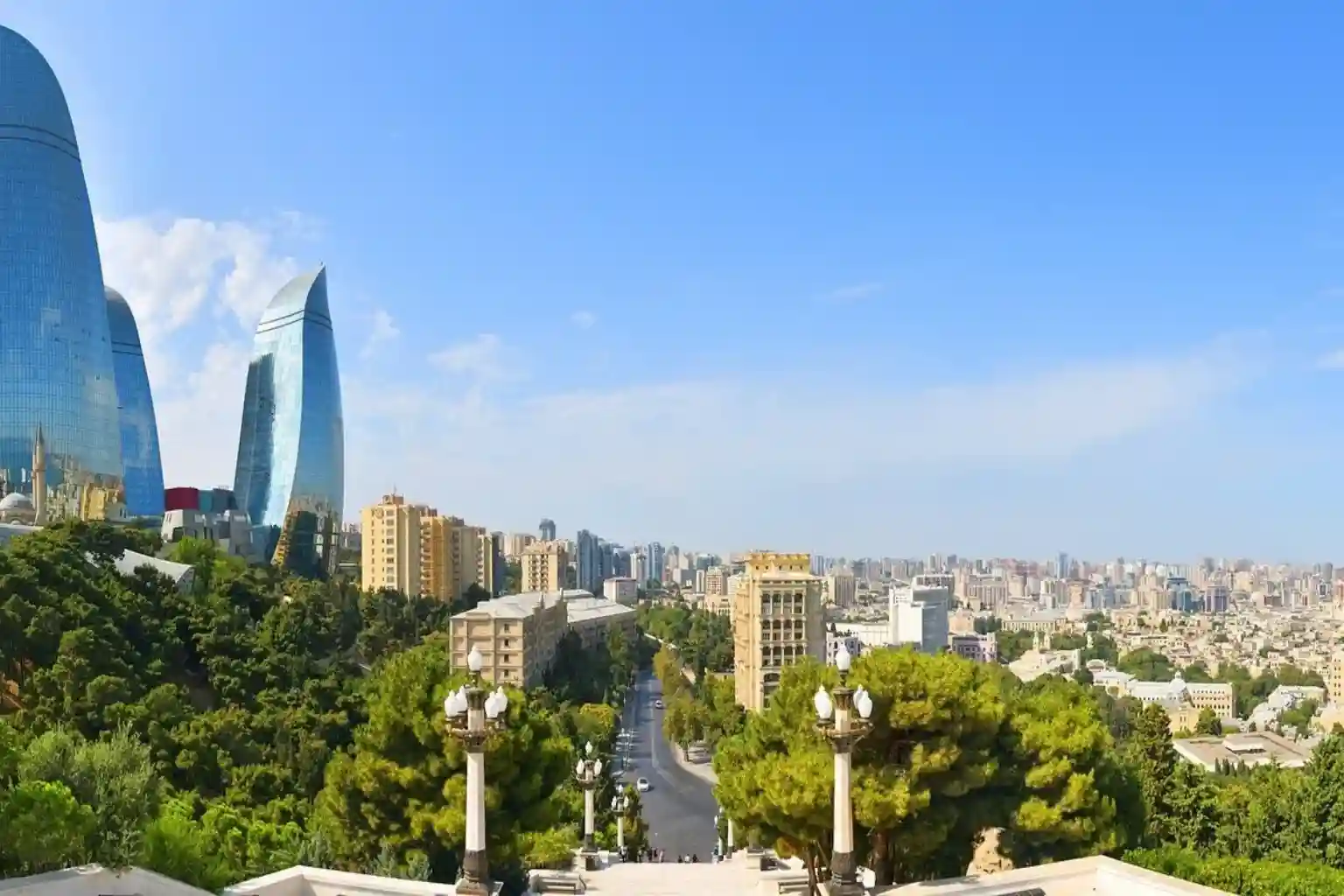
Azerbaijan is characterized by clear climatic diversity within a single geographic area. The nature of the weather in coastal Baku differs from the northern mountains and from the Lankaran region in the south, which has a more humid climate. Here are the weather details by season:
Spring (March to May)
Spring is one of the most distinctive periods in Azerbaijan. In March, temperatures range between ten and fifteen degrees, with the possibility of rain and the major Novruz Bayrami celebrations between the twentieth and twenty-fourth of the month.
April sees a clear transition to temperatures ranging between fifteen and twenty degrees, alongside nature reaching the peak of its bloom. May is warmer, with temperatures between twenty and twenty-five degrees, as the lower mountain trails begin to open and the Baku Flower Festival takes place.
Rain may fall during April and May, but it generally does not disrupt a visit. Some higher mountain trails may remain closed until May because of remaining snow.
Summer (June to August)
Summer presents two different experiences within Azerbaijan. Baku and its surrounding plains may see temperatures reaching thirty to forty degrees during July and August, which makes extended walking more tiring.
The mountain regions of Gabala, Sheki, and Quba, on the other hand, enjoy temperatures between fifteen and twenty-five degrees, turning them into suitable destinations for escaping the capital’s heat.
The beach in June and September is more comfortable than in July and August. Summer also represents the peak tourist season, so hotel prices reach high levels. The cold northern Khazri winds give Baku some relief during the hottest days.
Autumn (September to November)
Autumn combines moderate weather with changing nature in Azerbaijan. September brings temperatures between eighteen and twenty-six degrees, with a relative drop in crowds, the grape harvest season, and the Formula 1 race in Baku, which is an event that drives hotel prices up sharply during its week.
October adds a distinctive autumn scene in the forests of Sheki, Quba, and Shamakhi, with temperatures between twelve and nineteen degrees and the Baku Jazz Festival. November becomes colder and wetter, but it sees crowds disappear and prices drop noticeably.
Winter (December to February)
Winter in Azerbaijan is practically divided into two different experiences. Baku enjoys a relatively mild winter, with temperatures between three and nine degrees, along with rain, clouds, and cold Khazri winds that make the weather feel colder than the actual temperature readings. Snow is rare in the capital and cannot be relied upon. The mountains, on the other hand, enter the peak of the skiing season.
Shahdag and Tufandag open their doors in mid-December and continue until March. January is the coldest month of the year across all of Azerbaijan. In Baku, winter brings lower prices and greater calm at tourist sites, along with the ability to visit museums and indoor landmarks without queues.
Best Month to Visit Azerbaijan
Here is the comprehensive table for all twelve months of the year:
| Month | Weather | Average Temperature | Crowds | Best For |
|---|---|---|---|---|
| January | Cold and rainy | 3 to 6 degrees | Very low | Mountain skiing |
| February | Cold and cloudy | 4 to 7 degrees | Low | Skiing and museums |
| March | Mild and rainy | 10 to 15 degrees | Low | Novruz and culture |
| April | Spring and sunny | 15 to 20 degrees | Moderate | Sightseeing and nature |
| May | Ideal | 20 to 25 degrees | Moderate | Everything |
| June | Warm and summery | 25 to 30 degrees | High | Beach and mountains |
| July | Very hot | 28 to 38 degrees | Very high | Mountains only |
| August | Very hot | 27 to 36 degrees | Very high | Mountains and beach |
| September | Ideal | 18 to 26 degrees | Moderate | Everything |
| October | Autumnal and mild | 12 to 19 degrees | Low | Nature and culture |
| November | Cold and rainy | 8 to 14 degrees | Very low | Budget travel |
| December | Cold in the mountains | 3 to 9 degrees | Low except at resorts | Skiing and New Year |
May, September, and October stand out as the three strongest months in the table. May combines spring nature with weather suitable for walking around Baku, hiking in the mountains, and visiting Sheki and Gabala away from the summer crowds.
September combines the warmth of late summer with the calm of the post-peak period, as autumn colors begin to appear in the north. October adds the forest colors of Sheki, Quba, and Shamakhi, alongside the start of a noticeable drop in prices.
Read more: Gabala in December
Best Time to Visit Baku, Gabala and Other Popular Destinations
Azerbaijan’s climates vary from one region to another, so the right time to visit differs depending on the destination. Here are the details for the most important cities and regions:
Best Time to Visit Baku
May and September are among the suitable periods for visiting Baku. Temperatures in May range between twenty and twenty-five degrees, and the city takes on a spring atmosphere with outdoor cafes and blooming gardens.
September provides comfortable temperatures as the summer crowds ease. July and August may be more difficult for extended walking in Baku because of the heat. Those looking for reasonable hotel prices should also be aware of the Formula 1 week in September, as prices rise sharply during that period.
Best Time to Visit Gabala
Gabala can be visited year-round, but the nature of the activities changes by season. May through October is suitable for nature, hiking, and riding the Tufandag cable car, while the skiing period runs from December through March.
October presents a distinctive autumn scene when the forests of Gabala turn golden around Lake Nohur. July and August represent the summer peak in Gabala, and they suit those who want to escape Baku’s heat and enjoy cooler and more comfortable weather.
Best Time to Visit Sheki
September and October are among the suitable periods for visiting Sheki. The forests surrounding the city turn to clear autumn colors, while moderate temperatures allow for easy strolling through the lanes and markets.
May and June offer another option with comfortable spring weather. January and February may be less suitable because of the difficulty of the mountain road at times and the closure of some small restaurants during the winter season.
Best Time to Visit Lankaran
April and May, in addition to the period from September through November, are suitable for visiting the Lankaran region with its subtropical nature. October and November offer a distinctive experience in Hirkan National Park, where the colors of the ancient forests change during autumn. Summer in Lankaran is hot and humid, which can make outdoor activity less comfortable.
Don’t miss: best cities in Azerbaijan
When Does It Snow in Azerbaijan
Snowfall in Azerbaijan is not tied to a single region or a specific period alone. In the mountain regions, snow begins from November and peaks during January and February. Shahdag, which exceeds two thousand and five hundred meters in elevation, sees weekly snowfall ranging between twelve and eighteen centimeters from January through March.
Tufandag in Gabala receives between four and nine centimeters weekly during the same period. Baku does not see snow regularly, as the average snowfall amounts to only two and a half days during January and February, and the quantities usually melt quickly.
Those looking for snow therefore generally head to the mountain regions rather than the capital. Quba, located on the slopes of Shahdag, represents another option for snow during the period from December through March, alongside the surrounding natural scenery.
Our team plans specialized family trips to Shahdag every winter, with Arabic-speaking guides and full transfer from Baku airport. Contact us on WhatsApp to design a custom ski trip for your family.
Read more: Azerbaijan Snow Season
Best Time to Visit Azerbaijan for Different Types of Travelers
Choosing when to travel is tied to the type of experience the traveler is looking for. Here are the suitable periods for each type:
- First-time travelers: May and September provide suitable weather, reasonable prices, and manageable crowds. Both months allow for combining Baku, Sheki, and Gabala within a single trip.
- Families: April, May, and September through October are suitable for general tourism. December and March suit ski trips to Shahdag and Tufandag. July and August may be less comfortable in Baku with young children because of the heat.
- Couples: October brings autumn atmospheres in Sheki and Gabala, while May adds blooming nature and the outdoor cafe atmosphere in Baku.
- Adventure lovers and hikers: June through September is suitable for high mountains such as Khinalug and the Greater Caucasus Mountains. April and May suit lower elevations and the beginning of the trail season.
- Skiing enthusiasts: January and February provide the best snow quality with fewer crowds, while December suits those who want to combine skiing with New Year celebrations.
- Budget travelers: November and February are among the least expensive months for hotels in Baku and flight prices. Hotel prices may drop during these months by up to fifty percent compared to the summer peak. Ski resorts such as Shahdag and Tufandag are an exception, as their prices rise during the winter season.
Our Arabic-speaking travel experts design customized Azerbaijan programs based specifically on your UAE holiday dates.
Best Things to Do in Azerbaijan by Season
The activities and experiences available in Azerbaijan change clearly from one season to the next. Here are the highlights of what can be done during each season:
Spring
Spring is suitable for exploring Baku, starting from the Old City and extending to the Caspian Sea Corniche and Heydar Aliyev Park, which appears during this period with a spring atmosphere. April and May open the mountain hiking season at lower elevations in Gabala and Sheki.
The Novruz celebrations in March offer a cultural experience tied to street fires and popular markets. In May, the Baku Flower Festival adds hundreds of thousands of flowers to squares and gardens in a festive atmosphere.
Summer
Summer directs attention toward the mountain regions of Azerbaijan. Gabala, Sheki, Quba, and Khinalug appear in their greenest and most vibrant state. Reaching the village of Khinalug, one of Azerbaijan’s highest villages at two thousand and three hundred meters, represents a different experience for mountain lovers.
The Tufandag cable car can also be ridden above the green forests, swimming at the beaches of Lankaran and Absheron, and camping in the Caucasus Mountains. The Afurja waterfalls in Quba are at their peak flow during this period.
Autumn
Autumn is associated with the harvest season and the changing colors of nature in Azerbaijan. Grapes can be tasted at farms in Kakheti, Shamakhi, and Ismailli, and the autumn colors of the forests of Sheki and Quba can then be enjoyed.
The Pomegranate Festival Narbayrami in Goychay takes place in October, alongside the Jazz Festival in Baku. Formula 1 takes place from September 21 through 23. Baku’s outdoor cafes become more comfortable as the weather moderates after a long hot summer.
Winter
Winter is the skiing season at Shahdag and Tufandag from December through March. Indoor museums in Baku offer a quiet space to visit away from queues, while traditional baths and mountain spas provide a chance to relax after a day of skiing.
In the evening, Baku and its illuminated Flame Towers can be explored in a winter atmosphere. As night falls, the natural fires at Ateshgah temple and Yanar Dag appear more clearly in the cold and darkness of winter.
When Not to Visit Azerbaijan
There are periods worth considering when planning a trip, especially if the priority is weather, prices, or calm.
July and August in Baku may be difficult for those who prefer walking long distances. Temperatures may exceed forty degrees, which makes visiting outdoor landmarks more tiring, while prices and crowds are at high levels.
The Formula 1 week in September, from the twenty-fourth to the twenty-sixth, leads to a sharp rise in Baku hotel prices. Those not planning to attend the race can factor this period into their choice of travel dates or book early.
November and early December are among the coldest and rainiest periods in Baku, with persistent clouds at times, which may not suit those focused on panoramic views and outdoor photography.
Plan Your Azerbaijan Trip with Makani Travel
Makani Travel and Tourism is a licensed agency headquartered in Ajman and operating for more than 22 years. The company describes itself as the only gold-rated travel agency in the UAE ranked among the top 100 travel companies in the world.
Our team includes experts trained at Burj Al Arab, Marriott, and Hilton, with experience in the details of planning holidays for UAE travelers. Here are the most prominent services. Makani offers for your trip to Azerbaijan:
- Direct contracts with hotels that guarantee the best prices and VIP additions not available when booking directly.
- Arabic-speaking experts who design the program based specifically on your UAE holiday dates.
- Full transfer from the airport and between cities, with local Arabic-speaking guides across various destinations.
- Around-the-clock planning to follow the trip from the first inquiry until the return.
Planning to visit Azerbaijan? Contact our travel experts to create a personalized itinerary around your preferred dates, interests, and budget.
FAQ
When not to visit Baku?
July and August are among the most difficult periods in Baku for those who prefer extended walking, as temperatures may exceed forty degrees. The Formula 1 week in September drives prices up noticeably for those who do not want to attend the race. November and December are colder, rainier, and cloudier for those focused on outdoor photography.
Is 7 days enough for Azerbaijan?
Seven days allow for experiencing a wide range of Azerbaijan’s attractions. Three days can be dedicated to Baku and the surrounding landmarks such as Gobustan and Yanar Dag, then one day for Shamakhi, one to two days for Sheki, and one day for Gabala. Those who want to add the south such as Lankaran or the north such as Quba need at least ten days.
What is the cheapest month to visit Baku?
January, February, and November are generally among the least expensive months for hotels in Baku and flight prices. Hotel prices may drop during these months by up to fifty percent compared to the summer peak. Ski resorts such as Shahdag and Tufandag are an exception, as their prices rise during the winter season.
Is 3 days enough in Baku?
Three days allow for covering the most prominent landmarks of Baku. The first day can be dedicated to the Old City, the Palace of the Shirvanshahs, and the Maiden Tower. The second day covers the Flame Towers, Heydar Aliyev Center, and the Caspian Sea Corniche. The third day is suitable for visiting Gobustan and its rock carvings and mud volcanoes. Those who want to add Yanar Dag and Ateshgah need a fourth day.
Is Baku cheap or expensive?
Baku sits at a moderate level between cheap and expensive destinations. It is clearly less expensive than Dubai and Western Europe, but more expensive than Georgia and Armenia. Eating at local restaurants away from the Corniche can suit most budgets, and hotels are available across all categories, from budget options to five-star luxury hotels.
What to avoid in Baku?
Avoid restaurants located directly on the main Corniche if you are looking for lower prices, as they may be expensive and tourist-oriented. Do not accept unofficial taxis and use the Bolt app instead. Check prices before sitting down in any restaurant, especially in the Old City area. Visiting Gobustan without a private car or an organized tour may be less convenient, as reaching the mud volcanoes requires covering additional distances.
